


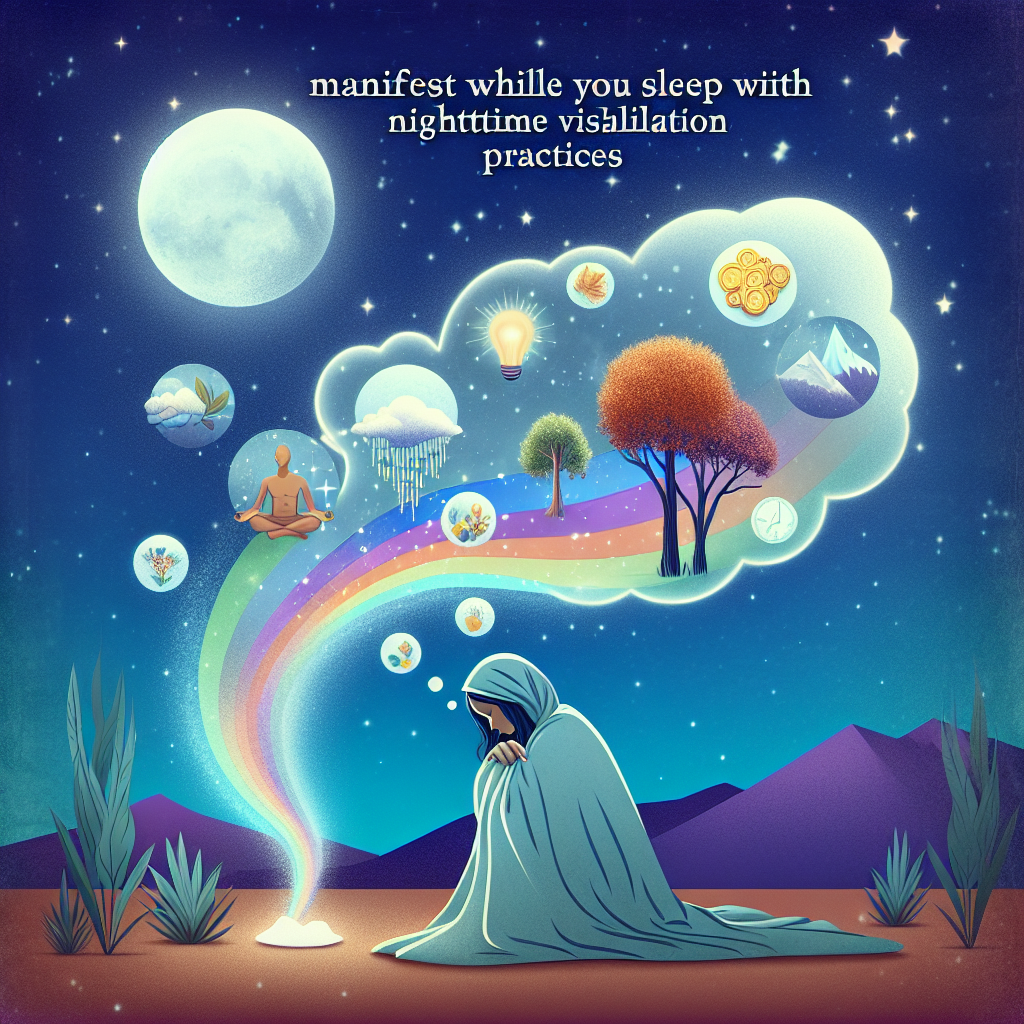
Manifest While You Sleep with Nighttime Visualization Practices
Unlocking the secrets of the subconscious can be a game-changer in manifesting the life you desire. Nighttime is a powerful time for this, as your brain is uniquely receptive to visualization practices. By adopting specific techniques, you can enhance your manifesting journey, turning dreams into reality while you slumber.
Understanding Manifestation: The Power of the Mind
Manifestation involves bringing thoughts and desires to life through focused intention. The process hinges on the principle that thoughts shape reality. When aligned with clear intention, these thoughts send powerful signals to the universe.
Visualization enters here, acting as a bridge between thought and reality. When you visualize regularly, your brain creates neural pathways that make your goals feel achievable. Evening hours are particularly potent as your brain transitions from the active to the serene, willing to accept and absorb new ideas.
Moreover, engaging your emotions intensifies the visualization process. When emotions accompany thoughts, they increase their frequency, boosting the manifesting process. This combined power of thought and emotion sets the stage for nighttime visualization practices.
How Sleep Enhances Visualization
Sleep acts as a facilitator for the manifestation process. During sleep, your brain processes and solidifies the day’s input. It’s this processing stage that amplifies visualization and creativity. Your unconscious mind works on problems and ideas you might struggle with during waking hours.
The renowned REM stage of sleep stimulates learning and memory, making it an optimal time for embedding visualized goals. The brain repairs itself and consolidates information, naturally enhancing the effects of visualization from earlier in the evening.
Understanding the circadian rhythm is essential, as it influences how your body and brain respond during the night. Going to bed with clear intentions means waking up closer to your goals, reinforcing the importance of a nightly manifestation routine.
Creating Your Nightly Visualization Routine
Crafting a nightly ritual is key for successful manifestation. Consistency builds a habit, teaching your mind to enter a state of visualization easier and quicker each time.
Start by selecting a quiet, comfortable space. Remove distractions, creating a calming environment conducive to reflection. Soft lighting or candlelight can promote relaxation, preparing your mind for focused visualization.
Set aside 10 to 15 minutes before bed. During this time, focus on your desired outcome. Picture it clearly in your mind’s eye, engaging all senses. Consider the colors, sounds, and feelings associated with the realization of your goal.
Guided Meditation for Manifestation
Guided meditations can enhance your visualization practice. Many resources exist, offering themes ranging from abundance to self-confidence. Select a meditation that aligns with your desired outcome.
Listen to the meditation as you relax and wind down for the night. The guide’s voice can direct your thoughts, ensuring you stay focused on manifesting what you seek. Over time, the structure will naturally connect you with your subconscious, turning aspiration into actuality.
Using Affirmations Alongside Visualization
Affirmations are another powerful tool when manifesting while you sleep. These statements reinforce beliefs and counter negative thought patterns.
Write a list of affirmations related to your goals. Ensure they are positive and in the present tense, such as “I am worthy of success” or “I attract love effortlessly.”
Repeat these affirmations quietly or aloud before bed. This practice fosters a mindset shift, drawing more similar thoughts and experiences into your life. Listening to recorded affirmations can also reinforce this habit while you drift into sleep.
The Role of Emotion in Visualization
Emotion acts as the gasoline in the engine of your visualization vehicle. When you feel deeply about what you envision, it triggers real changes in perception and action.
Consider how achieving your goals will make you feel. Let those emotions flood your consciousness as you visualize. When combined with imagery, these feelings set a potent intention, accelerating the manifestation process.
Overcoming Challenges in Nighttime Visualization Practices
Like any skill, mastering visualization takes practice and patience. Initial difficulty in focus or skepticism is common. Acknowledge these feelings, then gently redirect your mind toward your intention.
If your mind wanders, guide it back without judgment. Visualization improves with practice. For some, maintaining a journal alongside visualization practices encourages reflection and insight.
Write down any thoughts or experiences that emerge. This can reveal blocks or fears hindering your manifestation journey. Understanding these allows for deeper work in aligning your reality with your desires.
Building Consistency and Commitment
Commitment establishes a powerful momentum. Missing a day doesn’t derail progress, but consistency enhances manifestation’s speed. Regular practice strengthens the connection between your conscious aspirations and your subconscious capabilities.
Set aside no-catchup days to keep yourself accountable. Even a few minutes spent each evening maintaining focus on your goal reinforces the habit. With time, these efforts compound, cultivating a more receptive mind for future manifestation tasks.
The Science Behind Visualization
Recent studies bolster the effectiveness of visualization. Neuropsychology research indicates the brain cannot distinguish between a real memory and a vividly imagined one. This underpins the power of visualization to physically hardwire the brain for achieving your goals.
Brain imaging technology shows increased blood flow to focused brain regions. Visualization activates neural circuits that lay the groundwork for physical changes and actions. This connection showcases how night visualization rewires your brain, making goal achievement feel inevitable.
Incorporating Other Techniques: Sound and Aroma
Including sound and aroma can deepen the visualization experience. Both activate the senses, fostering relaxation and openness.
Soundscapes and Frequencies
Embrace soundscapes like ocean waves or rain, combined with specific frequencies like 432 Hz for a soothing effect. These frequencies promote relaxation, allowing deeper visualization states. Playing soft music during visualization can enhance emotional resonance, directly influencing the subconscious mind.
Aromatherapy for Enhanced Focus
Aromatherapy is another rewarding practice for enhancing nighttime visualization. Scents like lavender and chamomile are known for their calming effects. Diffuse essential oils in your space or rub a few drops on your pillowcase.
Connecting scents with visualization cues builds an association in your mind, signaling it’s time to relax and visualize your desires when the scent is detected.
Crafting Your Personal Visualization Practices
Develop a personalized approach by experimenting with various techniques. Every individual is different; what resonates for one may not work for another. Flexibility within your routine keeps it engaging and effective.
Try incorporating visualization practices found effective by others, such as vision boards or scripting. Record and review your progress regularly, noting the practices that boost your connection with the subconscious mind.
Adapting to Your Needs
As your goals evolve, so should your visualization practices. Stay conscious of changes in your desires or life circumstances, adjusting your routine accordingly.
Experiment with new approaches until you find what fuels and fulfills you. Remember, manifestation is a dynamic process driven by an ever-evolving inner dialogue.
FAQs
What is the best time to start my visualization practice?
Evening hours are the best as the mind transitions from activity to rest. However, consistency is more important than timing. Choose a time when you can fully dedicate your attention.
How long should I spend on visualization each night?
Aim for 10 to 15 minutes each night. This duration is manageable and effective for establishing a consistent routine.
Can I manifest multiple desires simultaneously?
Yes, but it’s easier to focus deeply on one desire at a time. Once you become adept, juggling multiple manifestations becomes natural.
What if I’m too tired to visualize at night?
On tired days, you can focus on simple affirmation repetitions or listen to a guided meditation. Adapt your routine to your energy level and circumstances.
How will I know if my visualization practice is working?
Notice changes in your mindset, emotions, and external circumstances. Your desires gradually manifest, showing noticeable shifts in how you feel and achieve your goals.
Must I use affirmations, or is visualization alone enough?
Both are potent tools. Many find using affirmations alongside visualization speeds up the manifestation process.
Can I replace visualization with a vision board?
You can combine visualization with vision boards for added effect. Seeing your goals represented daily reinforces their reality in your mind.
Is there scientific proof that visualization works?
Yes, many studies show that visualization affects neural pathways positively, improving motivation and accomplishment of goals.
Can visualization practice help with anxiety or stress?
Yes, visualization fosters relaxation and can counter anxiety by redefining negative thought patterns into positive, actionable intentions.
Is visualization effective if I’m naturally skeptical?
Being open-minded enhances effectiveness. Start small. Over time, personal experiences with positive results naturally minimize skepticism.
References
- Harvard Health Publishing: The secret to visualization
- Psychology Today: Visualization
- Sleep Foundation: The science of lucid dreaming
- The University of Chicago Medicine: REM sleep research insights
Incorporating these practices into your nightly routine doesn’t just create better sleep. Over time, these practices have the power to transform your life, aligning your dreams with reality. So, tonight, take a deep breath, close your eyes, and let your subconscious be the architect of your future.